Renting can feel easier: no big down payment, no surprise repairs, no long-term commitment. Then rent goes up again — and suddenly that “flexibility” starts to look expensive, especially because renters don’t build equity. The twist: recent data show the math may favor buying in more places than you think. Below is a clear, practical look at why that’s happening and what to check for your situation.
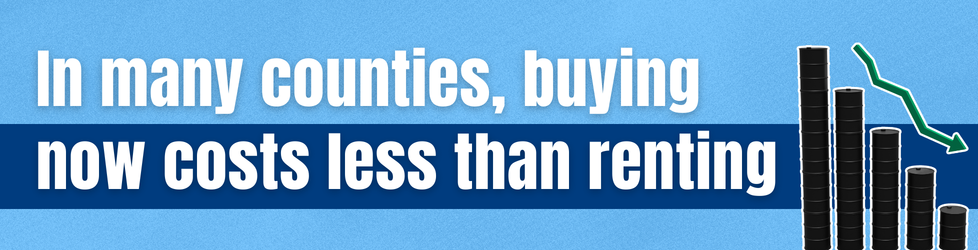
Recent analysis from ATTOM finds that owning a home costs less per month than renting a 3-bedroom in roughly 58% of U.S. counties. That figure already factors in typical homeowner expenses like insurance and maintenance. Three key forces explain why:
Slower home-price growth. Price changes have moderated versus past years, so purchase-price pressure has eased.
More inventory in many areas. A larger supply of homes helps stabilize pricing and gives buyers more choices.
Lower effective monthly payments. As mortgage rates ease and financing options (like rate buydowns) appear, some buyers see monthly payments that are competitive with — or even below — comparable rents.
Putting those elements together, the monthly math for ownership (mortgage + taxes + insurance + maintenance) can beat rent in many markets. That doesn’t mean buying is automatically right for everyone, but it does mean the default assumption that renting is always cheaper deserves a closer look.
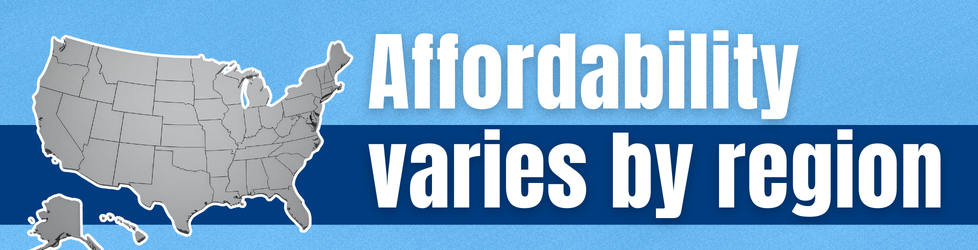
National headlines hide big local differences. The biggest improvements in affordability are showing up in the Midwest and the South, where price/rent ratios and growing inventory have tilted the balance toward buyers. In parts of the West, however, ownership can still feel out of reach for many renters.
The takeaway: the question “is buying cheaper than renting?” must be answered locally. Look at county or neighborhood data for rent vs. buy comparisons, check current inventory and recent price trends, and don’t rely on national averages to make your decision.
If rent vs. buy looks favorable for ownership but you don’t have a big down payment, you’re not alone — upfront costs are the main barrier for many renters. The good news: thousands of down-payment assistance programs exist across the country, and many buyers qualify without realizing it. The average assistance amount cited is about $18,000, which can cover a significant portion of a down payment or closing costs.
Combine that support with monthly payments that may be lower than you expect — especially if rates continue to ease — and buying becomes realistic for a lot more people. There are also loan products with lower down-payment requirements and local programs aimed at first-time buyers; a quick conversation with a lender can reveal options tailored to your situation.
Bottom line
Renting isn’t always the cheaper, safer option it’s often painted to be. In many counties across the United States, buying a comparable home costs less per month than renting — and assistance programs can help clear the down-payment hurdle. If you’re stuck in the “someday” loop, it’s worth running the numbers for your exact neighborhood to see what’s possible right now.
📍 Want a quick, personalized comparison (monthly cost to rent vs. buy and potential assistance programs for your area)? Contact us.